1. TURKISH RUGS -- page 1 of 22
Turkish Pile Rugs: The Collection -- See top of this page for more postings, pages 1 through 21.
CONTACT: dennisdodds@juno.com
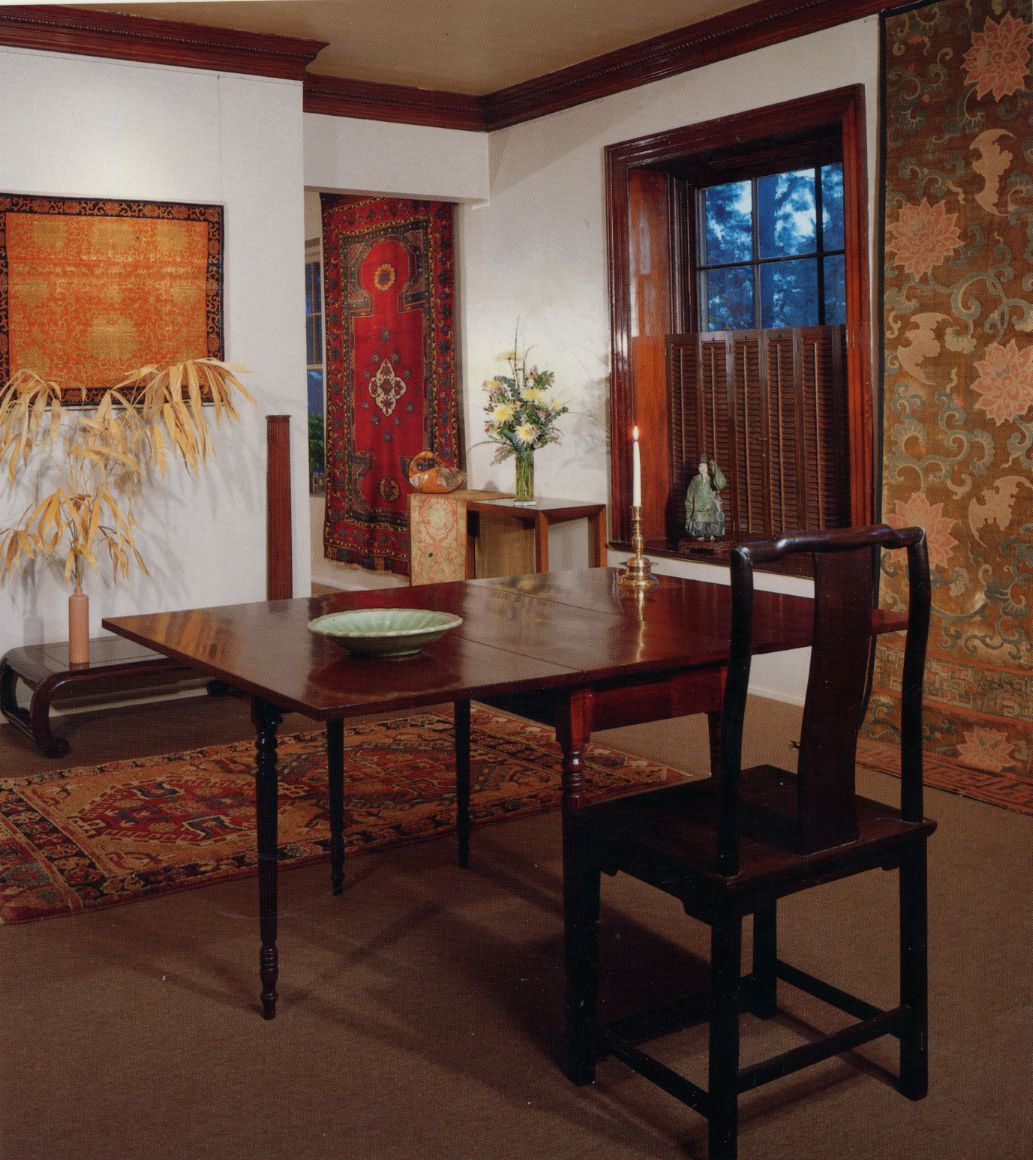
BELOW: Displaying early carpets and textiles in the home: on the walls: 1.) silk velvet pile altar cover, China, 18th century; 2.) Anatolian wool pile carpet displaying the "Bellini re-entry" design, circa 1600-25, now in the collection of the Los Angeles County Museum of Art; Provenance: Bausback, Mannheim, a private Austrian collection, and Michael Franses, London, from whom I purchased the carpet. Two other rugs, dated to the 16th-17th century and showing a comparable drawing style and nearly identical composition of the central medallion as well as the same wide range of saturated dyes, are in European collections. All three exhibit particularly colorful and elaborately rendered 'lappets' in the end panels. These three carpets may be from the same villade or atelier, each rendered with a different design variation with this medallion as a central feature. Connected blossoms that surround the central medallion are consistent with a particular Transylvanian carpet style, including 17th century Turkish rugs in Saxon churches. Other elements, including identical narrow guard stripes that flank the main palmette border, are found in examples of 16th-17th century carpets in the Vakiflar and Turkish and Islamic Art Museums. The evidence is clear that identical secondary borders, such as these, are a common feature in early Turkish carpets. This palmette border is found in a rare Ushak "Lotto" carpet dated to the second half of the 16th century; see Antique Ottoman Rugs in Transylvania; ed. by Stefano Ionescu; cat. 16, p. 90, 2004. For other weavings, there are: 3.) silk velvet pile chair cover, China 18th century; 4.) double panel of silk velvet pile with bats and lotus blossoms worked in gold metal and silk brocading, China, 17th century, provenance: Marian Hammer Gallery, Lugano, Switzerland; A very similar silk velvet brocaded carpet panel from the early Ching Dynasty is in the Chicago Art Institute; 4.) on the floor is an Anatolian village rug in wool pile displaying two octagonal medallions in the "large-pattern Holbein" design, circa 1850, from the Karapinar region. -- Dennis Dodds dennisdodds@juno.com
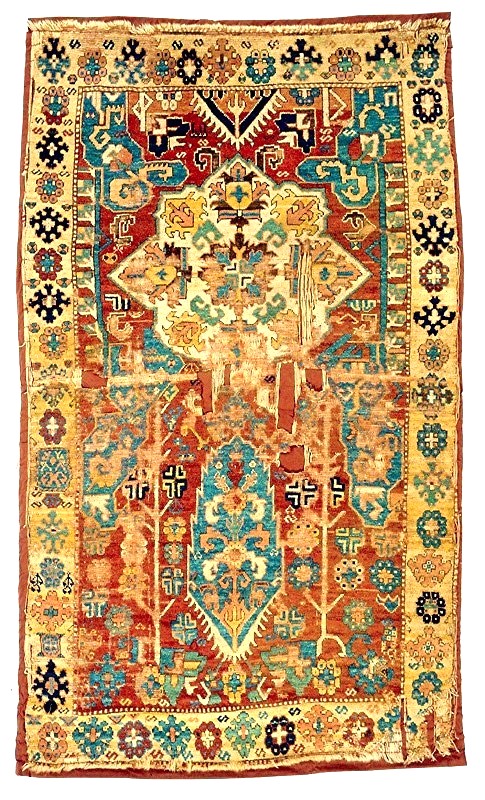
BELOW: Eastern Anatolia, 'Cypress and Medallion' rug, 4.6 x 9.8 feet, circa 1700-50. This design reflects a style of large workshop carpets woven in eastern Anatolia, or western Caucasus, in the early 18th century. One such carpet, published by Serare Yetkin, shows a date of 1744 AD. Another large carpet with these cypress and medallion motifs is from the McIlhenny Collection in the Philadelphia Museum of Art. This smaller village carpet shows how patterns transferred from workshop production to traditional village weaving. SOLD
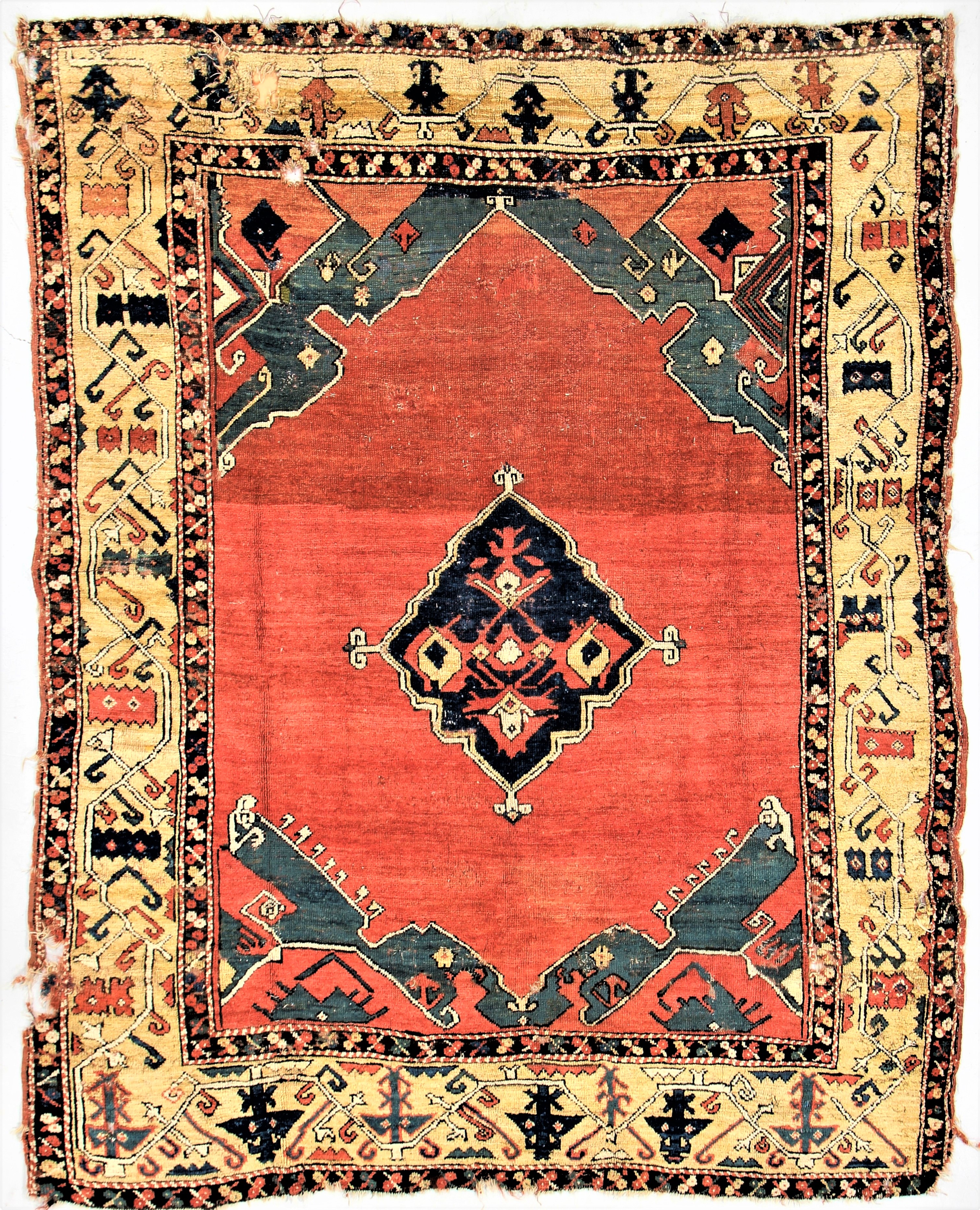
BELOW: Konya, 6 x 7 feet, circa 1750
The majestic open field of rose madder centers a solitary small medallion. The outline of this motif is also seen on a carpet fragment discovered in the Eshrefoglu Mosque in Beyshehir that dates to the 15th century. See Erdmann, K., The History of the Early Turkish Carpet, p. 70, plate 70. Blue-green spandrels carry stylized geometric motifs and a vigorous and bold meandering angular vine of the 'Turkmen Line' type appears in the wide, pale yellow border. The palette, construction and wool quality all point to a central Anatolian origin, possibly Cappadocia. This open, spacious layout represents a village version of a 16th century style. A similar example is in the Turk ve Islam Museum in Istanbul, identified as western or central Anatolia, 17th or 18th century.
BELOW: Western Anatolia, "Crivelli" type, first half of the 18th century. Note the open curled animal, or leaf, forms inside some of the arms of the cross medallions. Later versions have replaced these with simple flowerheads, or indistinguishable small medallions. SOLD
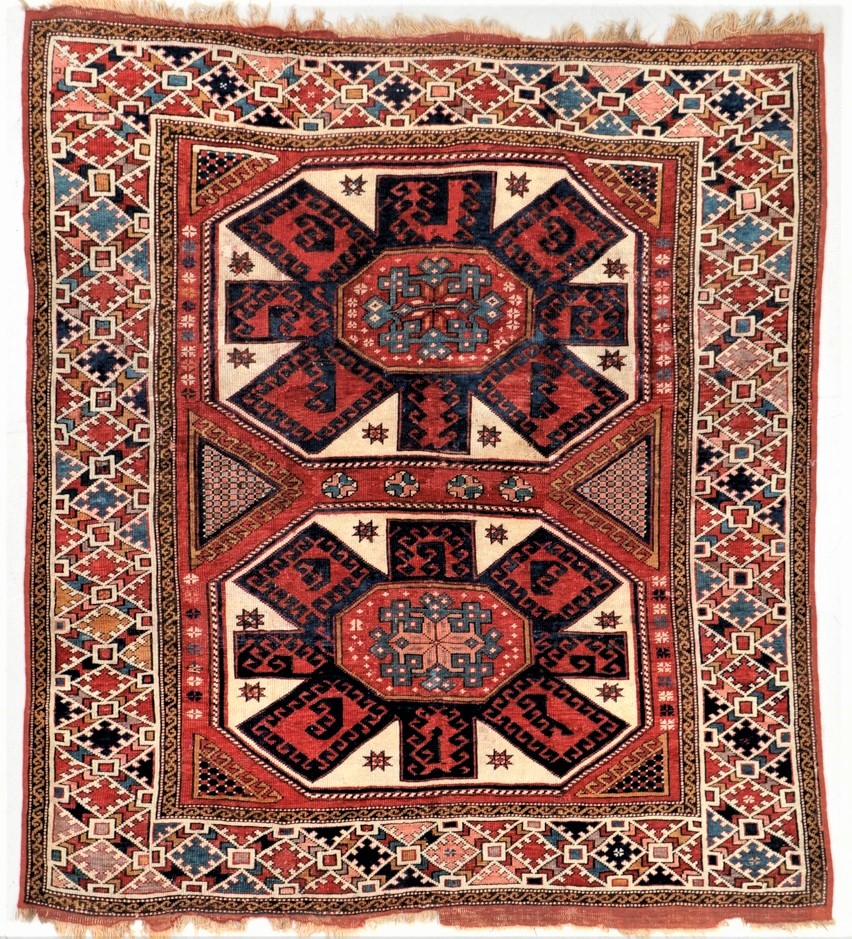
BELOW: Central Anatolia, circa 1700-50. SOLD
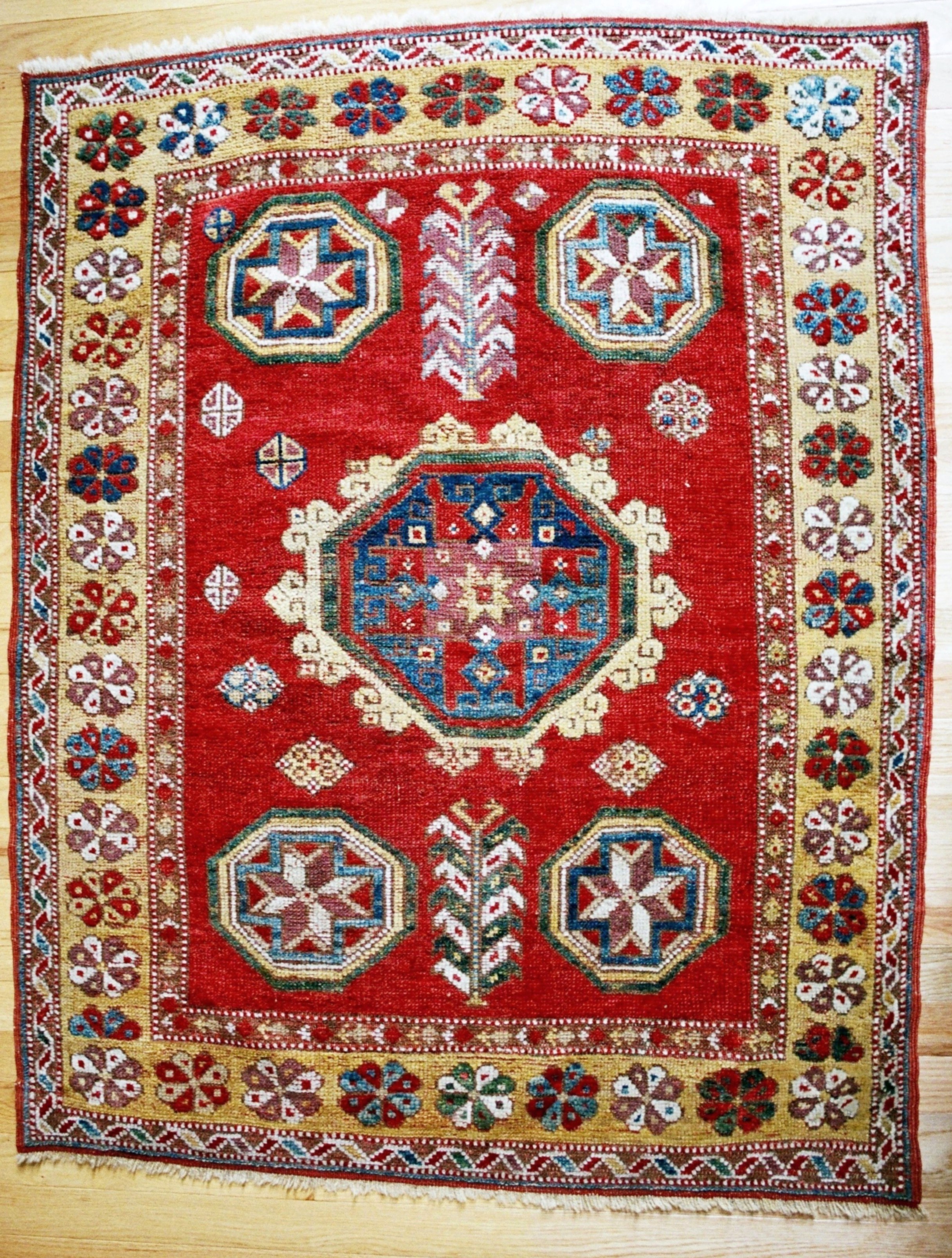
BELOW: An unusual and dramatic Turkish rug from central Anatolia and possibly woven in one of the villages around Aksaray. In 1999, a German collector showed me several images of later rugs of a similar type that he had discovered in a mosque in that vilayet. This is an early piece and is probably the second oldest example that I have seen of this design. The oldest one -- on an ivory ground -- was formerly in the possession of Franz Sailer, then of Salzburg, who published it in an exhibition catalogue for TEFA in Maastricht in the early 1990s. He identified it as Aksaray, early 17th century. This rug likely dates around 1700, or earlier.
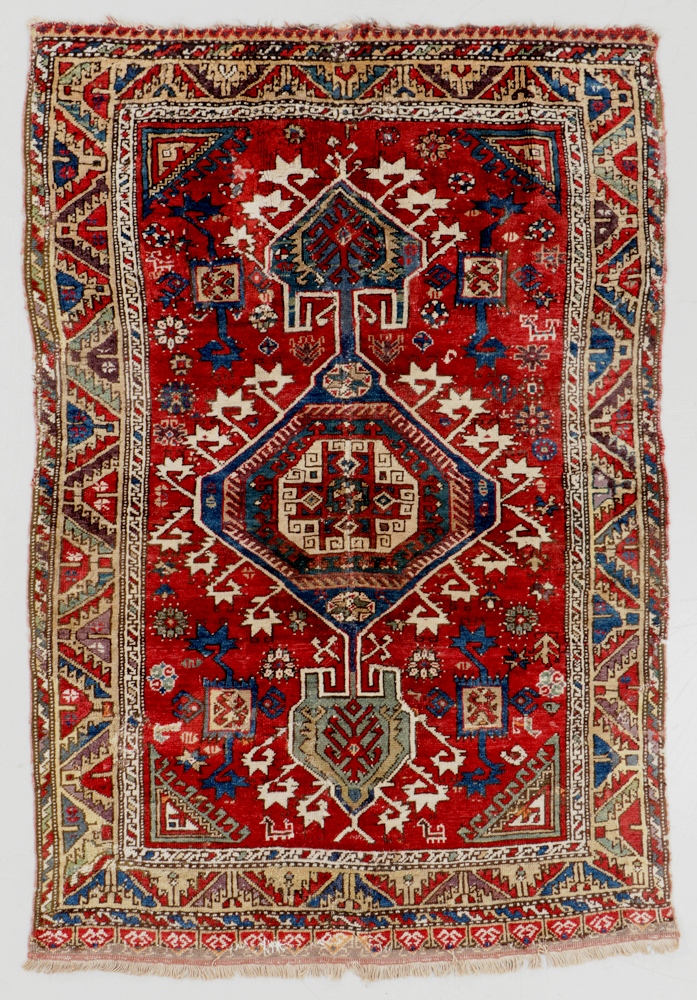
BELOW: Central Anatolia, Cappadocia region, circa 1700. Purchased from a village house near Urgup in 1977, this long carpet displays a series of segmented blossoms from the Ottoman quattrefleurs pattern book. Dr. Friedrich Spuhler devoted much study of this group of carpets in the major publication, ORIENT STARS, the splendid collection of Heinrich Kirchheim. Many of these pieces (often referred to as 'yellow-ground Konyas') are on a yellow ground, as well as being heavily wefted. Another characteristic is the almost complete oxidation of brown/black dyes in the border, The striking white ground in this example is an attractive and unusual feature, as are the aubergine blossoms. It is most likely a product of a Cappadocian village and not from Konya.
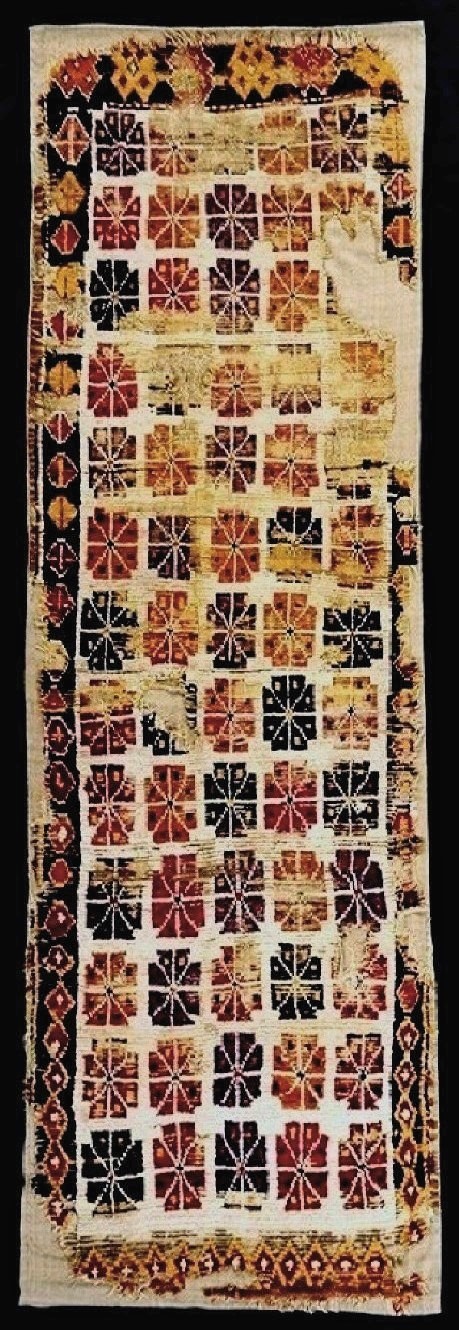
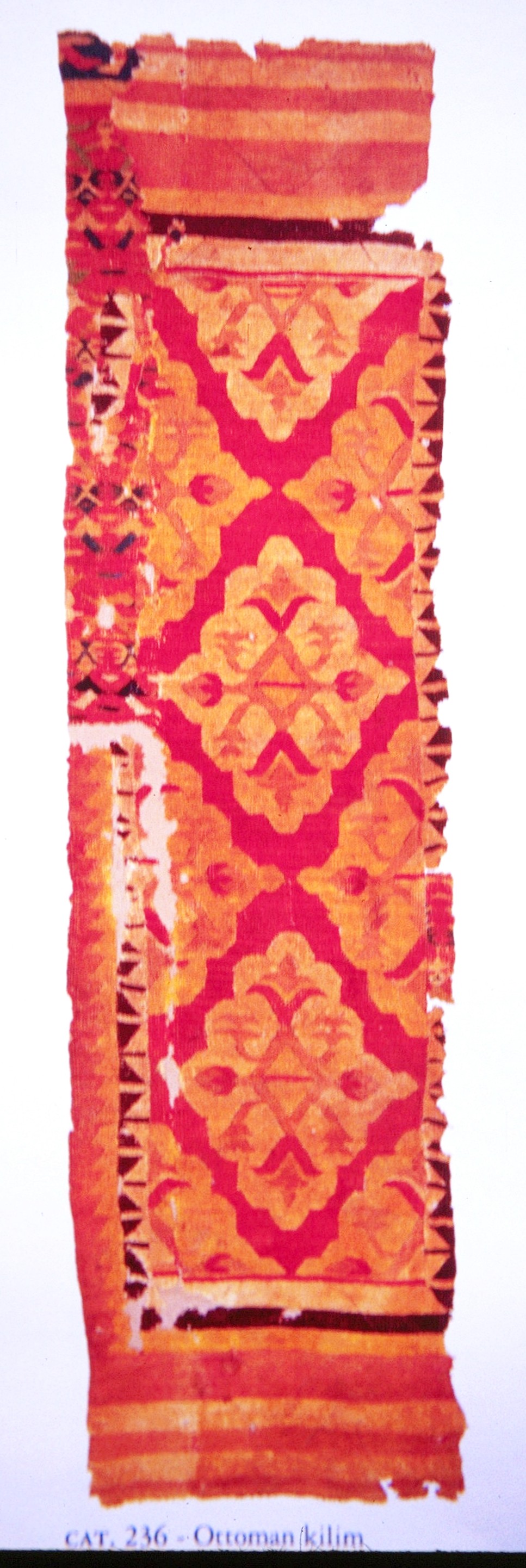
ON HOLD...
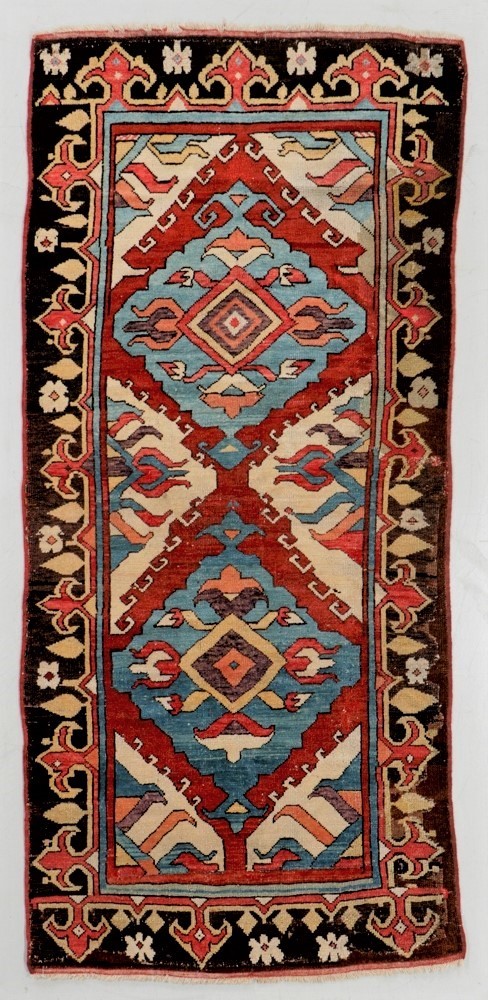
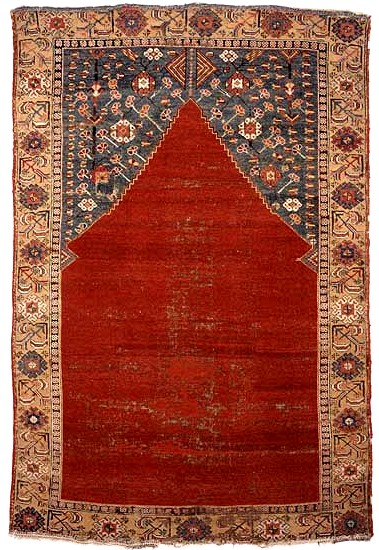
BELOW: A broad and open panel forms the mihrab of this rare prayer rug that probably dates 1675-1725. The spandrels above the red arch contain design elements found in Transylvanian carpets. Many of these were woven in west or southwest Anatolia and exported to Saxon Protestants in Transylvania for use as commemorative donations in their parish churches. The border is a series of typical Ottoman tulips with leaves on a diagonal stem that is found mainly in carpets known as Ladik. But this carpet uses black wefts and has a flexible handle, like a cloth. Ladik weaving is usually slightly stiffer, with moderately displaced warps and with red or undyed brown wool wefts. And the format of Ladik carpets tends to be taller and narrower than this one which is more square in proportion.